From individual data to coordinated decisions

Distro’s Energy Hub helps businesses and energy advisors understand shared energy constraints, identify flexibility, and make better group-level decisions — without giving up control over individual data.

Contact Sales

Built for business parks, SME clusters, and energy advisors facing grid congestion and electrification pressure.

Business Park

Individual optimization no longer solves collective constraints

Businesses increasingly face energy challenges that sit outside their own premises:
shared grid connections, overlapping peak loads, electrification pressure, and limited contracted capacity.

Even when individual companies act responsibly, the combined impact can still trigger penalties, restrictions, or blocked growth.

Energy Hubs exist to address this exact gap — where decisions are no longer individual, but the consequences still are.

Energy challenges are no longer individual

What is an Energy Hub?

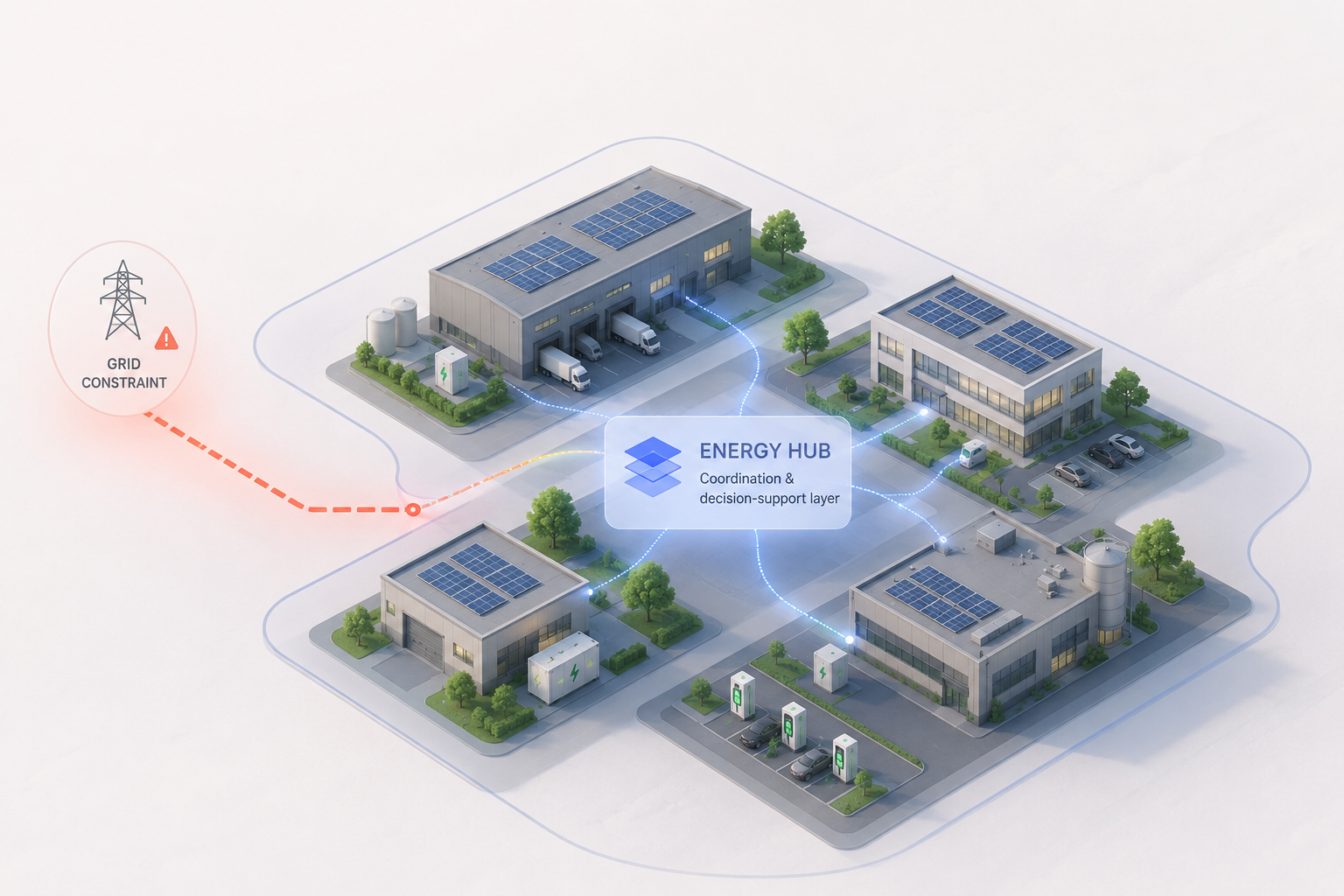
An Energy Hub is a structured way for multiple businesses to gain insight into how their combined energy profiles behave over time.
It allows participants and advisors to:
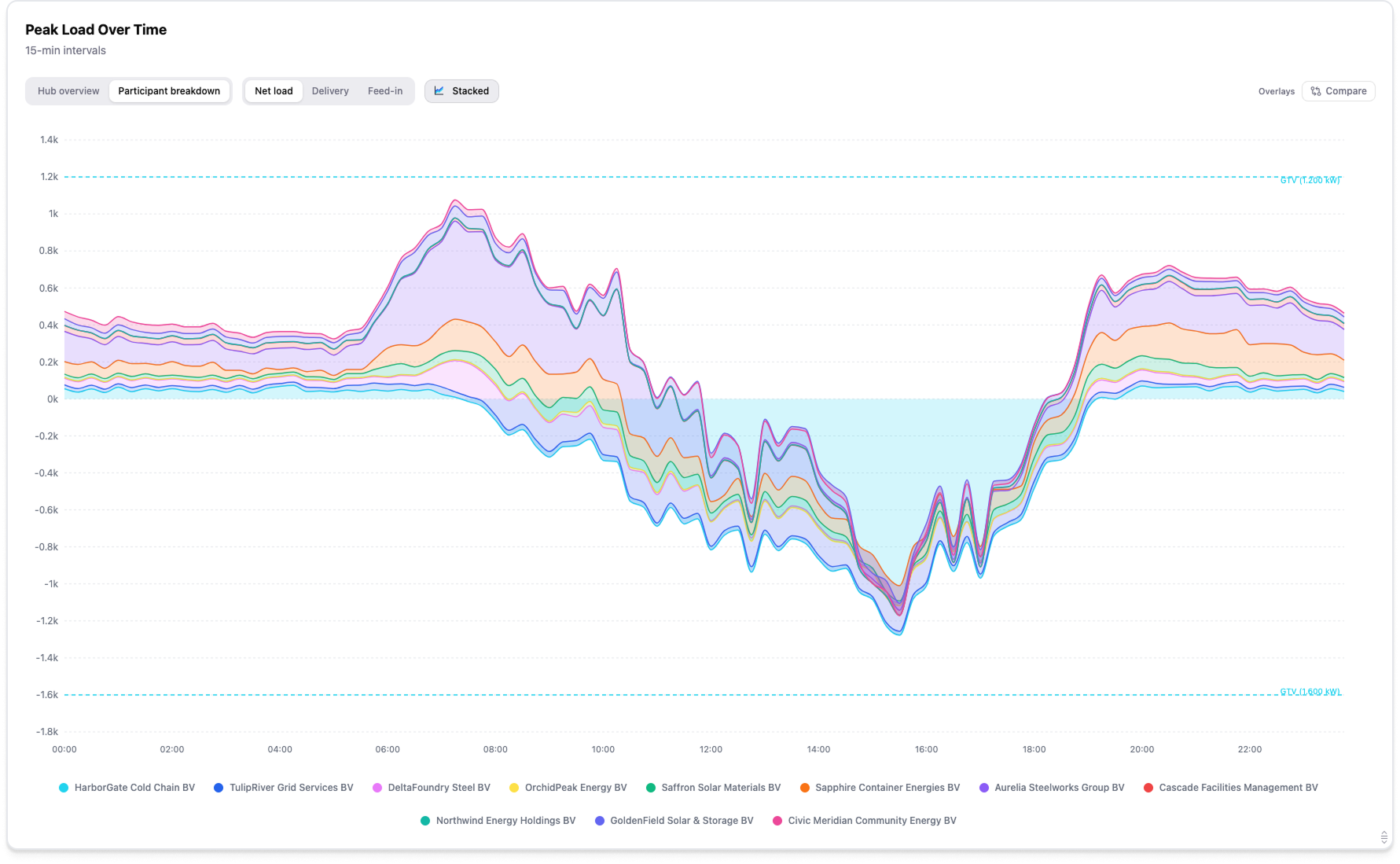
  • Understand group-level consumption, generation, and peak loads
  • See where constraints emerge
  • Identify where coordination or flexibility could make a difference
An Energy Hub is not:
  • A shared energy contract
  • A requirement to expose all operational data
  • A replacement for individual energy management
It is a coordination and decision-support layer, built on top of individual insights.
Dashboard mockup
Dashboard mockup

Built around trust, roles, and control

Energy collaboration only works when roles and responsibilities are clear.

Distro’s Energy Hub is designed around a few core principles:
  • Controlled access
    Data is shared based on roles and permissions, not by default. Advisors or trustees only see what is necessary for their role.
  • Aggregation first
    Group-level insights focus on patterns and peaks, not on exposing individual details.
  • Clear governance
    The Energy Hub supports structured collaboration without informal data exchange or manual coordination.
  • Participant control
    Each business remains the owner of its own data and decides how it can be used.
These principles allow meaningful coordination without forcing openness where it is not appropriate.

What you gain with Distro's Energy Hub

Distro provides the digital backbone for Energy Hubs — from data to decisions.
System

See the whole system

Understand aggregated demand, peaks, and load behaviour across all participants, not just per meter.
Risks

Identify shared risk early

Spot congestion risks before they turn into penalties, delays, or blocked growth.
Decisions

Create a common ground for decisions

Use one shared view to align businesses, advisors, and trustees around facts, not assumptions.
Prepare

Prepare for what comes next

Energy Hubs form the foundation for future actions like scenario modelling, asset planning, and coordination strategies.
Dashboard mockup

How Distro supports Energy Hubs

Distro provides the digital backbone for Energy Hubs - from data to decisions.
  • Hub dashboards
    View individual and aggregated energy profiles across time.
  • Flexibility insights
    Identify where peaks can be reduced, shifted, or coordinated.
  • Role-based access
    Trustees, advisors, and participants each see what’s relevant to them.
  • Data governance by design
    Participants decide who can access their data — and for what purpose.
  • Scenario exploration
    Explore “what if” scenarios before investing in assets or contracts.
Energy Hubs address this problem at the level where it actually exists.
Contact Sales

Who Energy Hubs are for

SME owners

Who want to grow without being surprised by grid limits.

Business parks & collectives

Who need shared insight before making collective decisions.

Energy advisors & trustees

Who coordinate, analyse, and guide without manual data chaos.

Start with insight, not assumptions

You don’t need to commit to an Energy Hub on day one.
Start by connecting smart meters, exploring insights, and understanding where coordination could make a difference.